DIAGNOSTICS
Check Engine Light On? Here's What It Could Mean
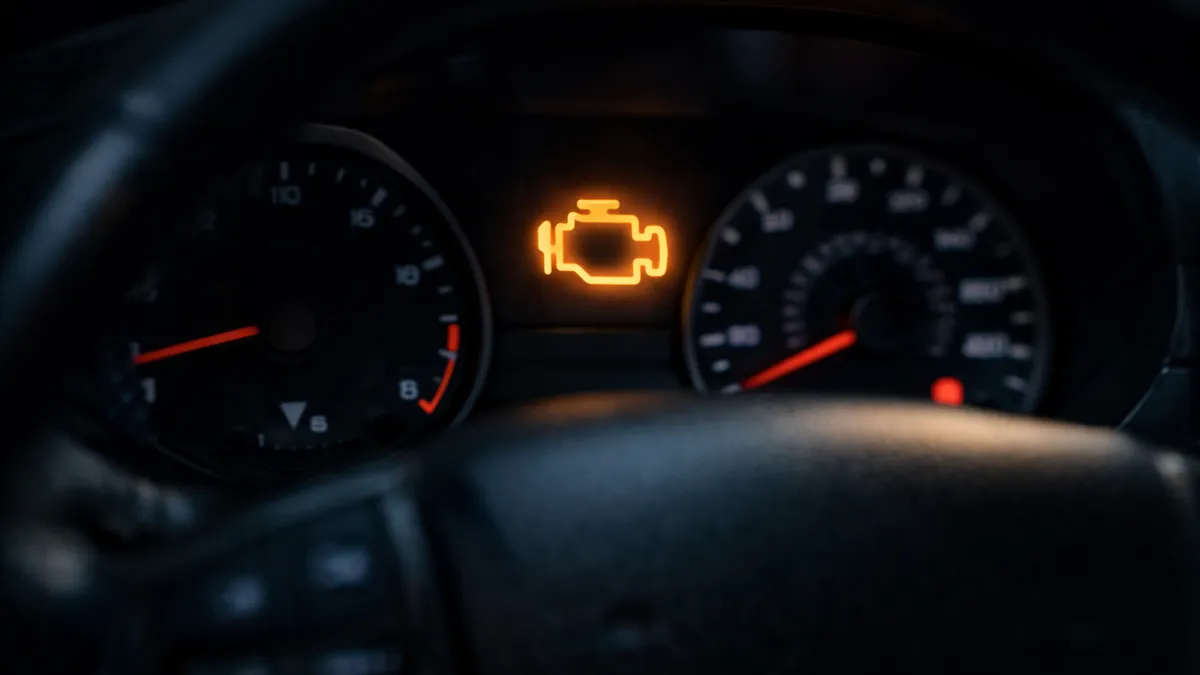
Few things cause more anxiety for drivers than seeing that little amber engine icon light up on the dashboard. Your mind immediately jumps to worst-case scenarios -- blown engine, transmission failure, thousands of dollars in repairs. Take a breath. While you shouldn't ignore a check engine light, it's often less catastrophic than you think.
At P&C Repair in Thomaston, we diagnose check engine lights every day. Here's what that light actually means, the most common causes, and how to decide what to do next.
What the Check Engine Light Actually Is
Your vehicle has a computer called the ECM (engine control module) that constantly monitors dozens of systems and sensors. When something operates outside its expected range, the computer stores a diagnostic trouble code (DTC) and turns on the check engine light -- also called the malfunction indicator lamp (MIL).
Here's the important thing to understand: the check engine light tells you that something triggered a code, not what specifically broke. A code like P0301 tells us "cylinder 1 misfire detected." But the misfire could be caused by a bad spark plug, a failing ignition coil, a clogged fuel injector, a vacuum leak, or even low compression. The code points to the symptom, not the root cause. That's why proper diagnosis matters.
Steady Light vs. Flashing Light
There's a critical difference between a steady check engine light and a flashing one:
- Steady light: Something is wrong, but it's not an emergency. You can continue driving to your destination and schedule a diagnostic appointment soon. Don't ignore it for weeks, but you don't need to pull over immediately.
- Flashing light: This means a severe misfire is occurring that could damage your catalytic converter. Pull over safely, reduce your speed, and get the vehicle to a shop as soon as possible. Driving with a flashing check engine light risks turning a moderate repair into a very expensive one.
The 10 Most Common Causes
Based on what we see regularly at our Thomaston shop, here are the most frequent reasons that check engine light comes on:
1. Loose or Worn Gas Cap
This is the cheapest and easiest fix. A gas cap that doesn't seal properly lets fuel vapors escape, which triggers the evaporative emissions system code. Before you schedule a diagnostic, try tightening your gas cap until it clicks, then drive for a day or two. If the light turns off, that was the problem. If the cap is cracked or the seal is worn, a new one costs $10-$20.
2. Oxygen Sensor Failure
Oxygen sensors measure exhaust gases and help the engine computer adjust fuel delivery. They wear out over time -- typically around 80,000-100,000 miles. A failed O2 sensor reduces fuel economy and increases emissions. Replacement usually costs $150-$400 depending on the sensor location and vehicle.
3. Catalytic Converter Issues
The catalytic converter reduces harmful exhaust gases. When it fails or loses efficiency, it triggers code P0420 or P0430. This is one of the pricier repairs, ranging from $800 to $2,000+. But here's the thing -- sometimes the cat itself is fine and the real problem is an upstream O2 sensor or exhaust leak that's giving the computer false readings. That's why diagnosis before parts replacement matters.
4. Spark Plugs or Ignition Coils
Worn spark plugs or failing ignition coils cause misfires, which trigger codes P0300 through P0312. You'll usually notice rough idling, hesitation, or reduced power along with the light. Spark plug replacement is a basic maintenance item. Ignition coil replacement is a moderate repair.
5. Mass Airflow Sensor
The MAF sensor measures how much air enters the engine. When it gets dirty or fails, the engine runs poorly and fuel economy drops. Sometimes cleaning the sensor with MAF cleaner solves the problem. Replacement runs $150-$400.
6. EVAP System Leak
Beyond the gas cap, the evaporative emissions system has hoses, valves, and a charcoal canister that can develop leaks. These are common on older vehicles and in Connecticut where temperature swings stress rubber components. Repairs range from $50 for a hose to $300+ for a purge valve or canister.
7. EGR Valve Problems
The exhaust gas recirculation (EGR) valve reduces nitrogen oxide emissions by recirculating exhaust gas back into the intake. It gets clogged with carbon deposits over time. Cleaning or replacement runs $200-$500.
8. Thermostat Issues
A stuck thermostat can cause the engine to run too cold or too hot, which triggers emissions codes because the engine doesn't reach optimal operating temperature. This is especially common in Connecticut winters when the engine is fighting cold ambient temperatures.
9. Vacuum Leaks
Cracked or disconnected vacuum hoses cause lean running conditions and misfires. The rubber hoses dry out and crack over time, especially after years of Connecticut heat-and-freeze cycles. This is usually an inexpensive repair once the leak is located.
10. Transmission Codes
Yes, the check engine light covers transmission problems too. Slipping, harsh shifts, or torque converter issues can all set codes through the check engine light. These need prompt attention to avoid further damage.
Why "Just Reading Codes" Isn't a Diagnosis
Parts stores will read your codes for free. That's fine for getting a starting point. But a code is not a diagnosis. We see it regularly: a customer goes to a parts store, gets told "it's code P0420, you need a new catalytic converter," buys a $1,200 cat, installs it, and the light comes back on because the real problem was a leaking exhaust manifold gasket that cost $200 to fix.
A proper diagnosis involves reading codes, checking freeze frame data, monitoring live sensor data, and performing targeted tests to confirm what actually failed. It takes knowledge, experience, and professional equipment. The diagnostic fee pays for itself by preventing you from throwing money at the wrong parts.
Will a Check Engine Light Fail My CT Emissions Test?
Yes, absolutely. A lit check engine light is an automatic failure on the Connecticut emissions test. If your test is coming up and the light is on, get it diagnosed and repaired first. There's no point paying the $20 test fee to get an automatic fail.
Also, don't clear the codes with a scan tool right before your test. The monitors will show "not ready" and you'll fail anyway. We see people try this all the time -- it doesn't work. The proper approach is to fix the underlying problem, clear the codes, drive 50-100 miles, then get tested.
What to Do When the Light Comes On
Here's a simple decision tree:
- Light is flashing: Reduce speed, avoid heavy acceleration, and get to a shop as soon as possible. Don't drive long distances.
- Light is steady, car runs fine: Check your gas cap. If it's tight, schedule a diagnostic appointment within the next week or two.
- Light is steady, car runs rough or differently: Drive directly to a shop. Running the engine in a degraded state for an extended period can cause secondary damage.
At P&C Repair, we diagnose check engine lights using professional-grade scan tools -- not the $30 code readers you see online. We read codes, analyze live data, and test components to find the actual problem. Then we explain what's going on in plain English and give you options with upfront pricing before we do any work.
Bring it by 64 N Main St in Thomaston, or call us at (860) 601-0271. We'll figure out what's going on.
Need Help With This?
If something in this article sounds like what your vehicle is going through, bring it in. We'll diagnose the issue and give you a straight answer.
Keep Reading
More from The Garage
Check Engine Light Before Your CT Emissions Test? Here's What to Do
Your emissions test is coming up and the check engine light is on. Should you go anyway? Here's why it's an automatic fail and what to do instead.
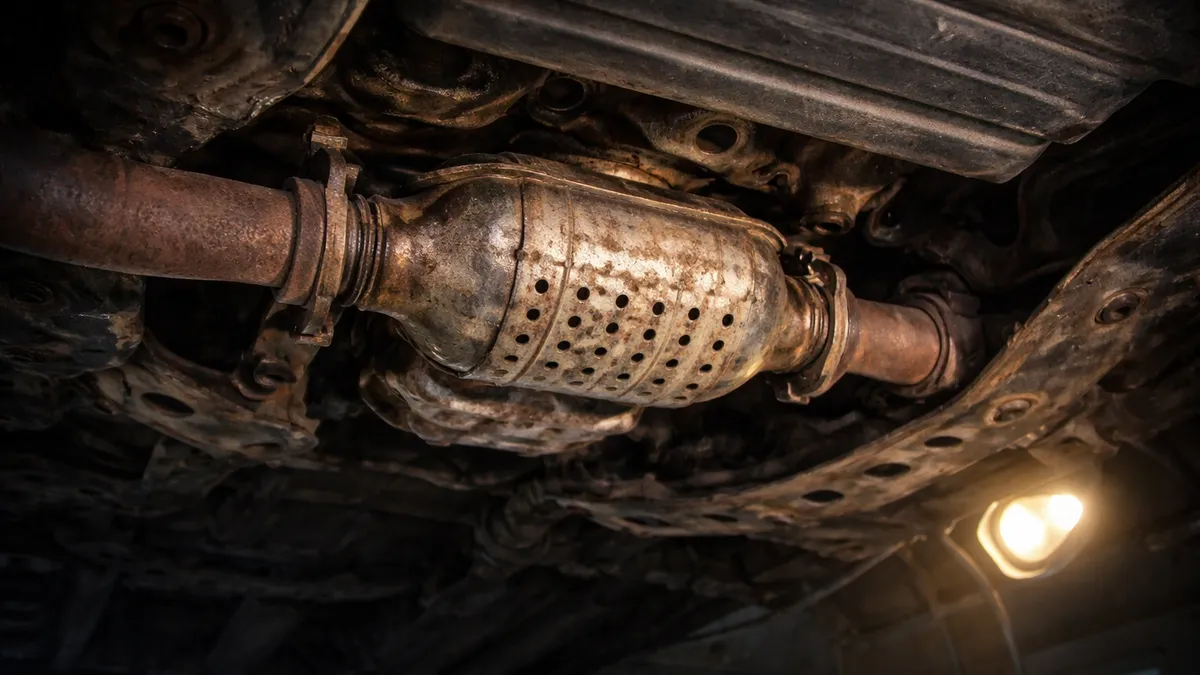
5 Common Reasons Cars Fail CT Emissions (and How to Fix Them)
Most emissions failures in Connecticut come down to these five problems. Here's what causes them, what they cost to fix, and how to prevent them.
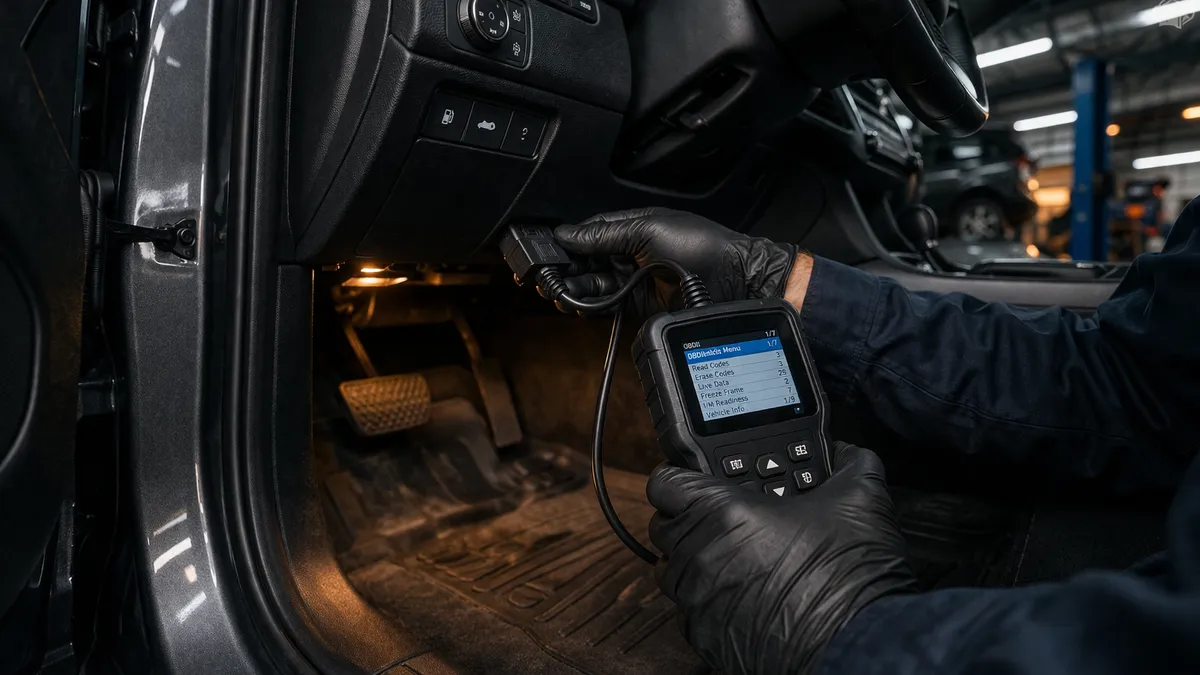
CT Emissions Test Coming Up? Here's What to Know
Everything Connecticut drivers need to know about emissions testing -- what's checked, who's exempt, how to prepare, and what to do if your vehicle fails.
Ready to Get Your Vehicle Fixed?
Schedule your appointment today. Free estimates on all repairs -- we'll explain what needs to be done before we do any work.