DIAGNOSTICS
White Smoke from Exhaust: What It Means and When to Worry
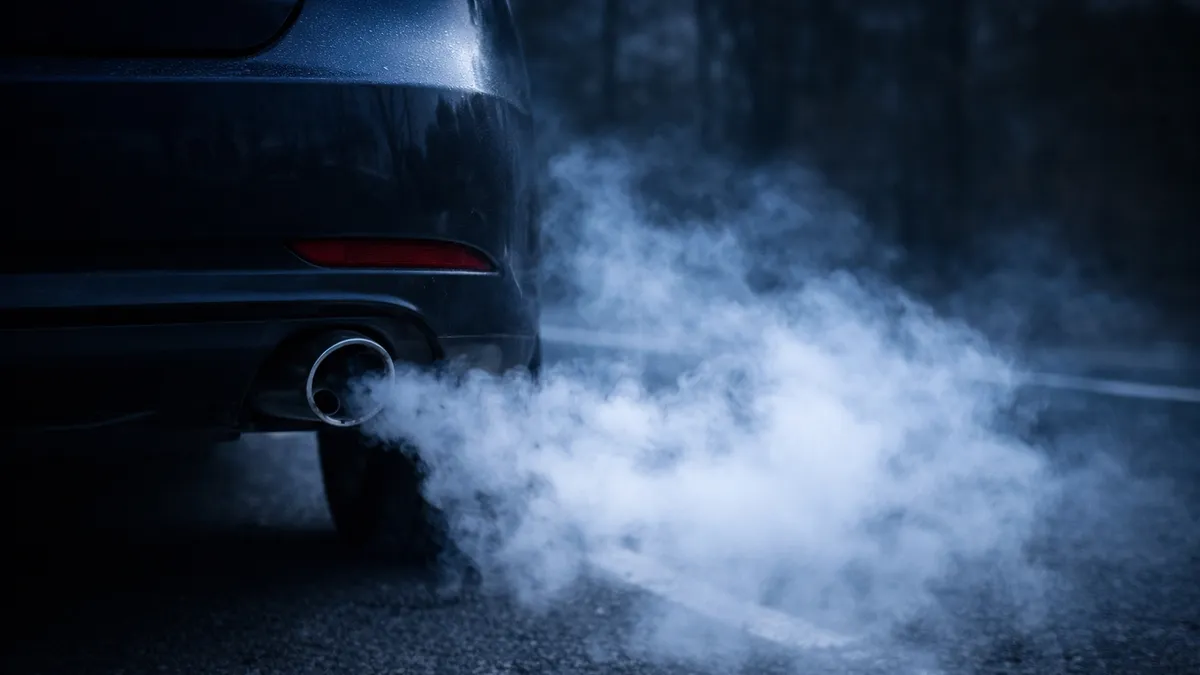
You start your car on a cold Connecticut morning and see white smoke billowing from the tailpipe. Is it just the cold weather? Or is your engine trying to tell you something is seriously wrong? The answer depends on a few key details -- and knowing the difference can save you from a major engine repair bill.
At P&C Repair in Thomaston, we see exhaust smoke concerns regularly, especially during the colder months. Here's what white smoke from your exhaust actually means and when you need to act on it.
Normal: Thin White Vapor on Cold Starts
Let's start with the good news. Thin, wispy white vapor that disappears within 5-10 minutes of driving is completely normal. It's not actually smoke at all -- it's steam.
Here's what's happening: when your engine sits overnight, moisture from condensation collects inside the exhaust system. When you start the engine and hot exhaust gases flow through the cold pipes, that moisture evaporates and comes out as visible steam. The colder the ambient temperature, the more visible it is.
This is extremely common in Connecticut from November through March. On a 20-degree morning in Thomaston, you'll see noticeable white vapor from virtually every car on the road for the first few minutes of driving. Once the exhaust system warms up, the moisture evaporates and the visible vapor disappears.
Signs it's just condensation:
- The vapor is thin and wispy, not thick or billowy
- It goes away within a few minutes of driving
- Your temperature gauge reads normal
- No sweet smell from the exhaust
- No check engine light
- Coolant level is stable
If all of the above are true, you have nothing to worry about. Drive on.
Warning Sign: Thick White Smoke That Persists
Now the bad news. Thick, persistent white smoke that continues after the engine is fully warmed up means coolant is leaking into the combustion chamber and being burned along with fuel. This is a serious problem that needs immediate attention.
Coolant (antifreeze) is supposed to circulate through passages in the engine block and cylinder head, absorbing heat and carrying it to the radiator. It should never mix with the combustion process. When it does, it produces dense white smoke with a distinctly sweet, almost syrupy smell that's different from normal exhaust.
Other signs that accompany coolant burning:
- Coolant level dropping without any visible external leak
- Overheating or temperature gauge running higher than normal
- White residue on the oil cap or dipstick (milky appearance)
- Bubbling in the coolant reservoir with the cap off and engine running
- Engine running rough or misfiring
What Causes Coolant to Enter the Engine?
Blown Head Gasket
The blown head gasket is the most common cause of white exhaust smoke in our shop. The head gasket sits between the engine block and the cylinder head, sealing combustion pressure in and keeping coolant and oil in their separate passages. When the gasket fails, coolant seeps into the combustion chamber.
Head gaskets typically fail due to overheating. Even one significant overheating event can warp the cylinder head just enough to compromise the gasket seal. Connecticut's temperature extremes -- freezing winters followed by hot summers -- stress cooling systems and make overheating more likely if maintenance is neglected.
A head gasket replacement involves removing the cylinder head, resurfacing it if necessary, replacing the gasket, and reassembling. It's labor-intensive work, typically running $1,000-$2,000 depending on the vehicle. But catching it early before the head warps or the block cracks makes all the difference.
Cracked Cylinder Head
If overheating was severe or prolonged, the cylinder head itself can crack. A cracked head allows coolant into the combustion chamber the same way a blown gasket does. The difference is that a cracked head needs to be replaced, not just resurfaced -- which adds to the cost.
Cracked Engine Block
This is the worst-case scenario. A crack in the engine block that connects a coolant passage to a cylinder allows coolant into combustion. Engine blocks are rarely repairable when cracked -- this usually means an engine replacement. This is why you should never keep driving a car that's overheating. Pulling over immediately when the temperature gauge spikes can be the difference between a $1,500 repair and a $4,000+ engine replacement.
Intake Manifold Gasket Leak
On some engines, the intake manifold has coolant passages running through it. A failing intake manifold gasket can allow coolant to be drawn into the cylinders through the intake. This is more common on certain GM V6 and V8 engines but can happen on others.
What to Do If You See Persistent White Smoke
If your car is producing thick white smoke that doesn't stop after warming up, here's what to do:
- Stop driving. Continuing to drive with a coolant leak into the engine risks catastrophic damage from overheating. Have the vehicle towed if necessary.
- Check your coolant level. If the reservoir is low and you haven't seen any puddles under the car, coolant is going somewhere internal.
- Check the oil. Pull the dipstick. If the oil looks milky or has a white/tan appearance instead of the normal amber or dark color, coolant is mixing with oil. This is very bad for engine bearings.
- Get a proper diagnosis. Don't just add coolant and hope for the best. A mechanic can perform a coolant pressure test, block test (checks for combustion gases in the coolant), and compression test to pinpoint the source of the leak.
Other Exhaust Smoke Colors and What They Mean
While we're on the topic, here's a quick reference for other exhaust smoke colors:
- Blue or gray smoke -- Engine is burning oil. Causes include worn piston rings, leaking valve seals, or a failing PCV valve. Common on higher-mileage vehicles.
- Black smoke -- Engine is running too rich (too much fuel). Causes include a stuck fuel injector, faulty fuel pressure regulator, or sensor issues. More common on diesel engines but can happen on gas engines too.
- No visible smoke -- Normal. Modern engines with functioning catalytic converters produce virtually invisible exhaust under normal operating conditions.
How We Diagnose Exhaust Smoke at P&C Repair
When you bring a white-smoke concern to our Thomaston shop, we don't just pop the hood and guess. We run through a systematic diagnostic process:
- Coolant pressure test to check for internal and external leaks
- Block test (also called a combustion leak test) that detects exhaust gases in the cooling system
- Compression test and/or leak-down test to check cylinder integrity
- Oil analysis -- visual check of the oil for coolant contamination
- Scan for codes -- misfire codes, coolant temperature codes, and other data that help pinpoint the problem
Once we know exactly what's failed, we give you a clear explanation and a written estimate. You decide how to proceed.
Prevention: Keep Your Cooling System Maintained
Most head gasket failures trace back to overheating. And most overheating traces back to cooling system neglect. Here's how to protect yourself:
- Check your coolant level regularly -- especially before and after winter
- Replace coolant on schedule -- most manufacturers recommend every 5 years or 100,000 miles for long-life coolant
- Watch your temperature gauge -- if it ever starts climbing toward the red, pull over immediately
- Inspect hoses and the radiator -- Connecticut road salt corrodes radiators and fittings. Have them inspected annually
- Fix small leaks early -- a $200 hose repair is cheap insurance against a $2,000 head gasket job
Seeing white smoke and not sure if it's normal or a problem? Bring it to P&C Repair at 64 N Main St in Thomaston. We'll tell you straight whether it's just the cold weather or something that needs attention. Call (860) 601-0271 -- we're here Monday-Friday 8AM-5PM, Saturday 8AM-1PM.
Need Help With This?
If something in this article sounds like what your vehicle is going through, bring it in. We'll diagnose the issue and give you a straight answer.
Keep Reading
More from The Garage
Check Engine Light On? Here's What It Could Mean
Your check engine light can mean anything from a loose gas cap to a serious engine problem. Here's how to tell the difference and what to do next.
Car Overheating but Coolant Is Full? Here's What to Check
If your engine is overheating even though the coolant reservoir looks full, several hidden problems could be the cause. Here's what to look for before serious damage occurs.
Car Won't Start and Makes a Clicking Noise? Here's Why
If your car clicks but won't start, the problem is usually electrical. Here's how to tell if it's the battery, starter, or something else -- and what to do next.
Ready to Get Your Vehicle Fixed?
Schedule your appointment today. Free estimates on all repairs -- we'll explain what needs to be done before we do any work.