DIAGNOSTICS
Car Pulling to One Side? Common Causes and Fixes
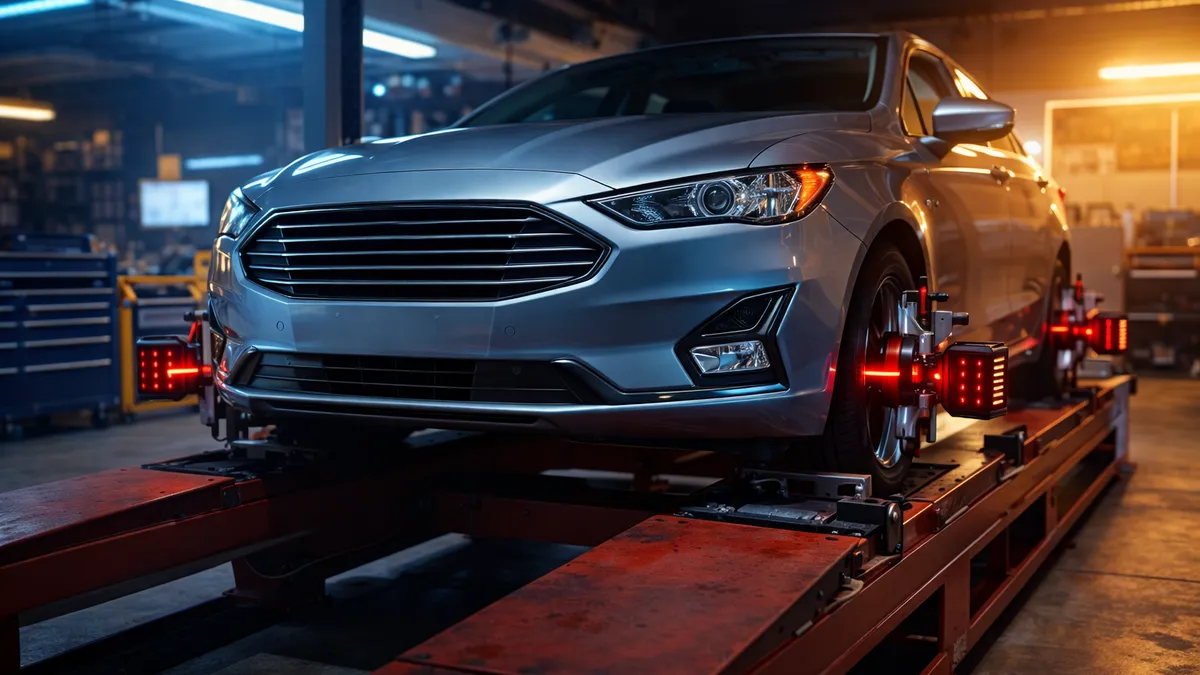
You're driving down a straight road, let go of the steering wheel for a moment, and the car immediately drifts to the left or right. Or maybe the steering wheel is tilted even though you're going straight. A car pulling to one side is more than an annoyance -- it's a sign that something in your tires, alignment, or brakes needs attention.
At P&C Repair in Thomaston, alignment and pull concerns are one of our most common service requests. Here's what causes a car to pull and how to figure out which fix you need.
Check Tire Pressure First -- It's the #1 Cause
Before you assume something expensive is wrong, check your tire pressure. Uneven tire pressure is the most common reason a car pulls to one side, and it's the easiest to fix.
A tire that's underinflated creates more rolling resistance than the others, which pulls the car toward that side. Even a 5 psi difference between the left and right side can cause a noticeable pull.
Connecticut's temperature swings make this especially common. For every 10°F drop in temperature, tire pressure drops about 1 psi. So a car that drove straight in October might start pulling in December just because the cold deflated one tire slightly more than the others. Check pressures when the tires are cold (before driving) and inflate to the specification on the sticker inside the driver's door jamb.
If equalizing the tire pressures fixes the pull, you're done. No shop visit needed.
Wheel Alignment: The Most Common Mechanical Cause
If tire pressure is fine and the car still pulls, wheel alignment is the next likely culprit. Alignment refers to the angles at which your wheels sit relative to the road and each other. Three key angles matter:
- Toe -- whether the fronts of the tires point inward or outward. Incorrect toe causes rapid tire wear and can affect straight-line tracking.
- Camber -- whether the top of the tire tilts inward or outward. Uneven camber side-to-side causes a pull toward the more positive (outward-tilted) side.
- Caster -- the angle of the steering pivot. Uneven caster causes a pull toward the side with less caster.
Alignment goes out of spec gradually from normal driving, but it can also change suddenly after hitting a pothole, curb, or road debris. Connecticut's roads -- especially in spring when frost heaves and potholes are at their worst -- are notorious for knocking alignment out of spec. If you drive Route 8, Route 6, or the Waterbury highways regularly, your alignment takes a beating.
The fix: a four-wheel alignment at P&C Repair. We measure all angles and adjust them to factory specifications. The entire process takes about an hour.
Important: Worn Parts Must Be Fixed Before Aligning
An alignment is only as good as the parts that hold it. If your tie rod ends, ball joints, or control arm bushings are worn, the alignment won't hold because those components allow the wheels to shift. We always inspect suspension components before performing an alignment. If something is worn, we'll let you know what needs to be replaced first.
Uneven Tire Wear
Even if alignment is currently within spec, tires that have already worn unevenly can cause a pull. A tire with more tread on one side than the other has a different grip characteristic than its matching tire on the opposite side. The car pulls toward the tire with more rolling resistance.
Check your tire tread by looking at the wear pattern across the face of each tire:
- Wear on inside or outside edge only -- caused by camber misalignment
- Feathered edges (smooth one direction, sharp the other) -- caused by toe misalignment
- Center wear -- overinflation
- Both edges worn, center okay -- underinflation
If tires are unevenly worn, an alignment will prevent further damage but won't undo the existing wear. If the wear is severe, you may need new tires to eliminate the pull. Rotating tires regularly (every 5,000-7,500 miles) helps them wear evenly.
Brake Pull: Car Pulls When Stopping
If the pull only happens when you apply the brakes -- the car tracks straight until you step on the pedal, then veers to one side -- the problem is in the brake system, not the alignment.
A stuck caliper is the most common cause of brake pull. The caliper squeezes the brake pad against the rotor. If a caliper sticks in the applied position, it drags on one side, causing the car to pull toward that wheel when braking. You might also notice the car pulling slightly even when not braking, because the stuck caliper creates constant drag.
Other brake-related pull causes:
- Collapsed brake hose. An old rubber brake hose can deteriorate internally, restricting fluid flow. The brake on that side either doesn't apply fully or doesn't release fully, creating uneven braking force.
- Uneven pad wear. If one side's brake pads are significantly more worn than the other, braking force is uneven.
- Contaminated brake pad. A pad contaminated with brake fluid, grease, or road chemicals has different friction characteristics, causing uneven stopping.
If you suspect a brake pull, get it checked promptly. Uneven braking is a safety concern, especially in emergency stops. Our brake repair service covers diagnosis and repair of all these conditions.
Tire Conicity and Tire Pull
Sometimes a pull is caused by the tire itself. During manufacturing, slight imperfections in the tire's internal structure can cause it to generate a lateral force as it rolls -- this is called tire conicity. The tire effectively acts like a cone, pushing the car to one side.
Tire pull is more common with new tires and usually shows up right after installation. The test is simple: swap the front left and front right tires. If the pull switches direction, the tire is the cause. If the pull stays the same direction, it's alignment or suspension. If a new tire is causing a pull, it may be covered under the tire manufacturer's warranty.
Worn Suspension Components
Worn struts, shocks, springs, or control arm bushings can all contribute to a car pulling. These components keep the wheels in their proper position. When they wear, the alignment shifts dynamically as you drive, especially during bumps and turns.
Signs of worn suspension beyond pulling:
- Clunking or knocking sounds over bumps
- Excessive body roll in turns
- Nose diving when braking
- Bouncy ride or feeling like the car "floats" over bumps
Connecticut roads -- with their frost heaves, potholes, and patched surfaces -- are hard on suspension. Drivers in Thomaston, Plymouth, Torrington, and the surrounding Litchfield County area should expect more frequent suspension maintenance than drivers in states with milder climates and better roads.
How We Diagnose a Pull at P&C Repair
When you bring a pulling car to our shop, here's our process:
- Check tire pressures -- ruling out the simplest cause first
- Road test -- we drive the vehicle to characterize the pull (constant vs. braking only, severity, direction)
- Tire inspection -- checking for uneven wear patterns, damage, and mismatched tires
- Suspension inspection -- checking ball joints, tie rods, bushings, struts, and springs for wear
- Brake inspection -- if the pull is during braking, we check for stuck calipers, hose condition, and pad wear
- Alignment measurement -- we measure all angles and compare to factory specifications
We fix the root cause, not just the symptom. There's no point aligning a car with worn tie rod ends -- the alignment won't hold. We'll explain what we find and let you decide how to proceed.
Car pulling left or right? Steering wheel off center? Bring it to P&C Repair at 64 N Main St in Thomaston. We serve drivers from Waterbury, Bristol, Torrington, and all of Litchfield County. Call (860) 601-0271 or stop by Monday-Friday 8AM-5PM, Saturday 8AM-1PM.
Need Help With This?
If something in this article sounds like what your vehicle is going through, bring it in. We'll diagnose the issue and give you a straight answer.
Keep Reading
More from The Garage
Car Shaking While Driving? Here's What's Causing It
If your car is vibrating at highway speed or shaking when you brake, several common problems could be the cause. Here's how to narrow it down and what to fix.
Car Making Grinding Noise When Braking — Causes and Fixes
Hearing a grinding sound when you hit the brakes? Here's what causes it, how serious it is, and what it costs to fix. Straight talk from a Thomaston CT mechanic.
Squealing Noise When Braking? Here's What It Means
Brakes squeaking or squealing when you stop? Here's what causes brake noise, when it's harmless, and when it means your brakes need immediate attention.
Ready to Get Your Vehicle Fixed?
Schedule your appointment today. Free estimates on all repairs -- we'll explain what needs to be done before we do any work.