MAINTENANCE_TIPS
Timing Belt vs Timing Chain: When to Replace and What It Actually Costs
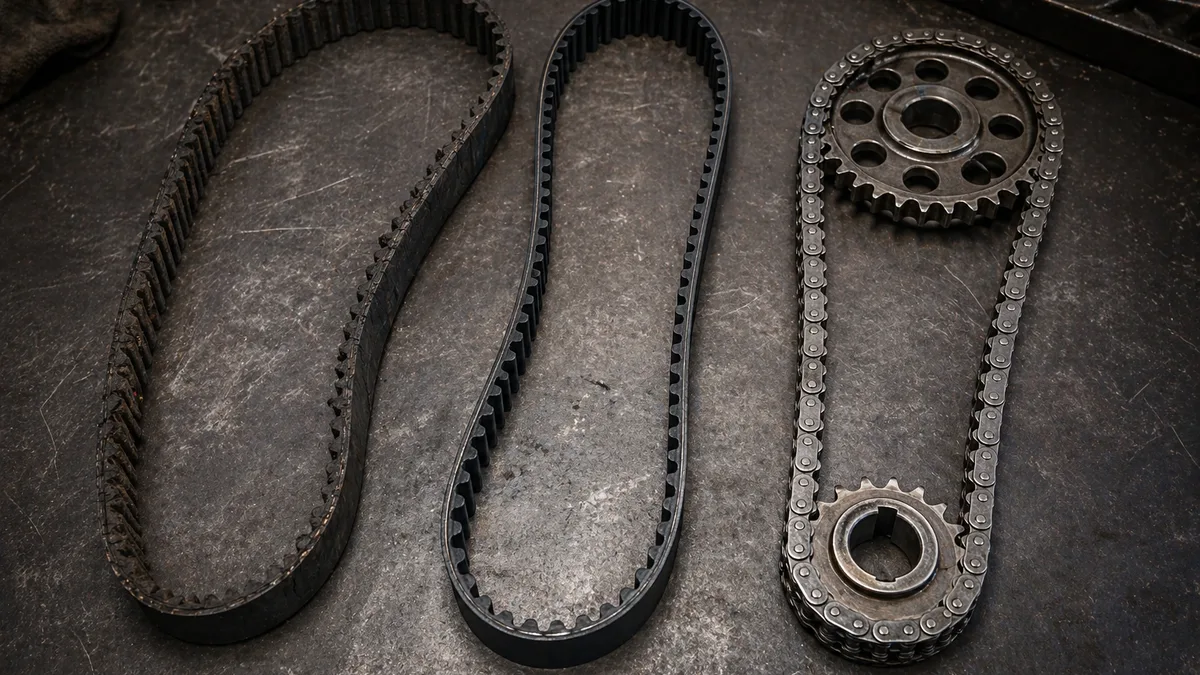
Somewhere inside the front of your engine is a belt or a chain that keeps the crankshaft and the camshafts spinning in perfect sync. That synchronization is what keeps the valves and the pistons from meeting -- which, on a modern engine, they really shouldn't. When the timing belt or chain fails, the engine stops. On most modern engines, it also gets seriously damaged.
This is one of those services where preventive maintenance is dramatically cheaper than failure repair. Here's the difference between timing belts and chains, how to know which yours has, when to replace each, and what you're actually looking at cost-wise for both options.
Timing Belt vs Timing Chain: The Basics
Both do the same job: keep the top and bottom halves of your engine in sync. The difference is construction:
- Timing belt -- reinforced rubber belt with teeth, runs in a dry housing, tensioned by a spring-loaded pulley. Quieter than a chain and easier for manufacturers to engineer around, but wears out and must be replaced on a schedule.
- Timing chain -- metal chain running in the oil-bath of the engine, tensioned by a hydraulic tensioner. More durable, often lasts the engine's life, but noisier and more expensive to replace when it does need service.
Which Does Your Vehicle Have?
There's no single rule, but here are the patterns we see:
- Most modern vehicles (2010+) -- timing chains, especially from Ford, GM, BMW, Mercedes, Mazda, and most Honda engines.
- Many Subarus -- timing belts on H4 engines through several generations.
- Many Hyundai, Kia, and older Hondas -- timing belts on some engines, chains on others, even within the same model year.
- VW/Audi diesels and some gasoline engines -- timing belts.
- Most modern diesels -- timing chains, though older diesels often used belts.
The owner's manual tells you for sure. So does any mechanic who looks up your VIN. If you're not sure what your engine has, ask -- the answer changes the maintenance schedule substantially.
When to Replace a Timing Belt
Manufacturer intervals typically fall in one of these ranges:
- Older belts (pre-2005): 60,000-75,000 miles
- Modern belts: 90,000-105,000 miles, or 10 years
- Some recent Subaru and others: up to 150,000 miles (but verify -- this varies by engine)
The key: a timing belt doesn't warn you before it fails. It's fine until it isn't. Unlike brake pads that squeal, or batteries that crank slowly, a belt with 10,000 miles of life left looks identical to one with 500. The manufacturer's interval is based on failure statistics, not on visual inspection. Trust the interval.
What a Timing Belt Service Includes
When we do a timing belt replacement, we almost always replace everything that shares the same mileage as the belt:
- Timing belt
- Water pump (driven by the belt on many engines -- same labor to replace)
- Tensioner and idler pulleys
- Crankshaft seal and camshaft seal (if accessible)
- Serpentine belt (while we're in there)
- Thermostat (often prudent)
Doing all of this together is dramatically cheaper than coming back in 30,000 miles for a water pump. The labor is mostly in gaining access -- once the front cover is off, replacing the belt alone vs the belt-and-related-components is a small incremental cost.
Typical full timing belt service cost: $800-$1,500 depending on the vehicle. On some engines -- Subaru H4, Honda V6, certain Audi V8s -- it can run $1,500-$2,200 because of access complexity.
When to Replace a Timing Chain
Chains last longer but aren't forever. Typical lifespan:
- Most engines: 150,000-250,000 miles
- Some engines (certain 2000s VW and BMW): chain or guide failure as early as 80,000-120,000 miles -- these are known problem engines, look them up for your specific vehicle
- Some engines: outlast the vehicle entirely
Signs a chain is stretching:
- Rattling noise at cold start that goes away after a few seconds -- the tensioner hasn't fully pressurized yet
- Rough idle and occasional engine misfire codes
- Cam or crank correlation codes (P0008, P0009, P0016-P0019) -- the computer has detected timing is off
- Loss of power or poor fuel economy
Typical timing chain replacement cost: $1,500-$3,000 on most engines, higher on complex designs. More expensive than a belt because chains run in the engine's oil system and require more extensive teardown.
Interference vs Non-Interference Engines
This is the cost multiplier that makes timing service so important.
- Interference engine: The pistons and valves occupy the same space at different times, kept separate by the timing. When timing fails, they collide. Valves bend. Cylinder heads may need machining or replacement. Pistons may be damaged. Repair cost: $3,000-$7,000, sometimes more.
- Non-interference engine: There's enough clearance that even with timing failure, valves and pistons don't hit each other. When timing fails, the engine just stops. Repair: tow plus new belt/chain, around $500-$1,200.
Most modern engines (roughly 80%+) are interference engines. If you don't know which your vehicle has, assume interference -- and treat the timing service interval like a hard deadline.
The Math on Preventive vs Catastrophic
Let's compare.
Scenario A -- you replace the belt preventively at 90,000 miles:
- Cost: $800-$1,500
- Timing: scheduled appointment, no stress
- Added benefit: fresh water pump, seals, and tensioner
Scenario B -- the belt fails at 105,000 miles on an interference engine:
- Immediate cost: tow ($100-$200)
- Engine repair: $3,000-$7,000
- Timing: vehicle is out of service for 1-3 weeks
- Added cost: rental vehicle or transportation during repair
The "I'll just wait and see" approach is one of the most expensive mistakes in car ownership. Belts don't warn you.
Timing Service at P&C Repair
Timing belt and chain service is one of the jobs we do most often on higher-mileage vehicles. We use OEM-spec parts, replace all the related components at the same time, and give you a clear written estimate before work starts. If you're at or approaching the manufacturer's interval, bring it in and we'll look up the specific service your vehicle needs.
P&C Repair -- 64 N Main St, Thomaston, CT. Call (860) 601-0271. We serve drivers from Waterbury, Plymouth, Terryville, Bristol, Torrington, Harwinton, Watertown, and throughout Litchfield County. Preventive timing work is one of the cheapest forms of insurance in car ownership -- well worth the appointment.
Need Help With This?
If something in this article sounds like what your vehicle is going through, bring it in. We'll diagnose the issue and give you a straight answer.
Keep Reading
More from The Garage
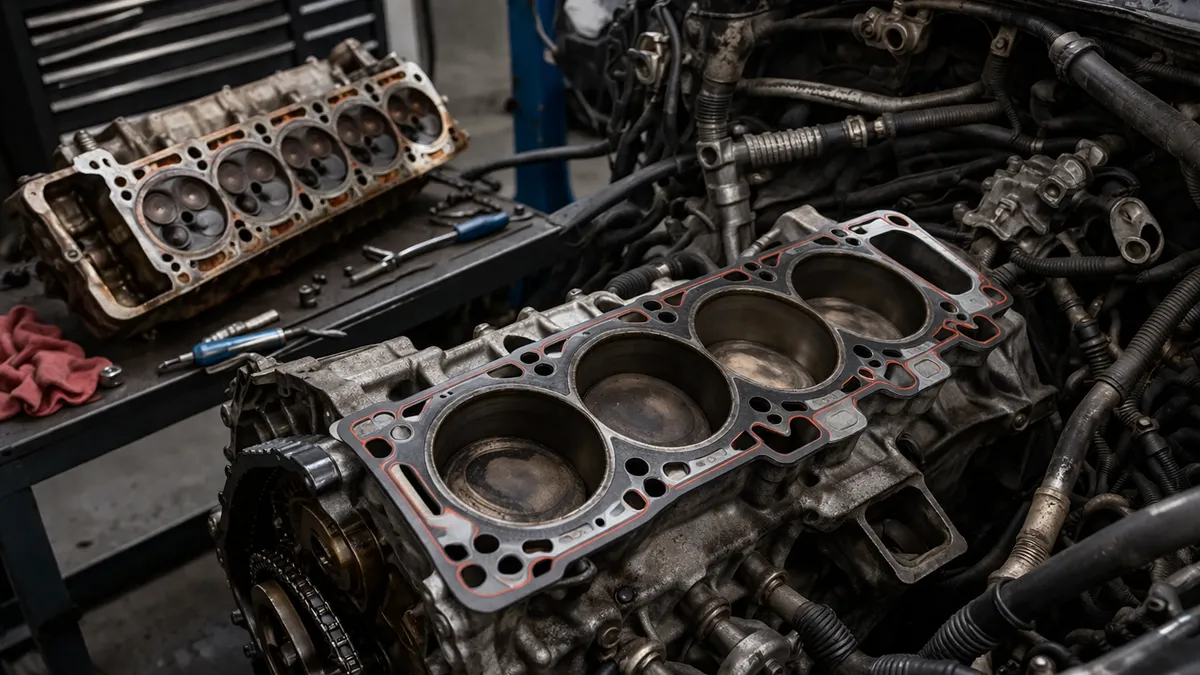
How Much Does Head Gasket Repair Cost? A CT Mechanic's Honest Breakdown
Head gasket repair typically costs $1,500-$3,000+ depending on your vehicle. Here's why it's so expensive, what's actually involved, and when it makes sense vs. replacing the engine.
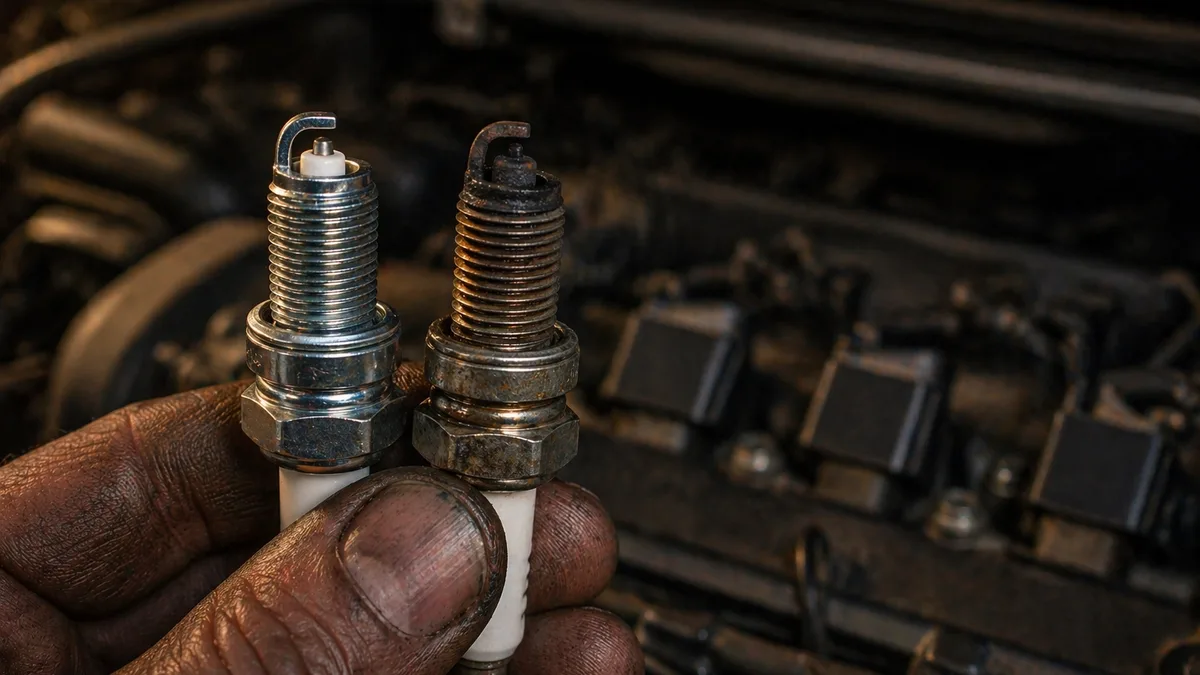
Engine Misfire: Symptoms, Causes, and Why a Flashing Check Engine Light Is an Emergency
Rough idle, loss of power, shaking, and a check engine light usually mean a misfire. Here's what that actually is, the six most common causes, and the one thing you should never do when the CEL is flashing.
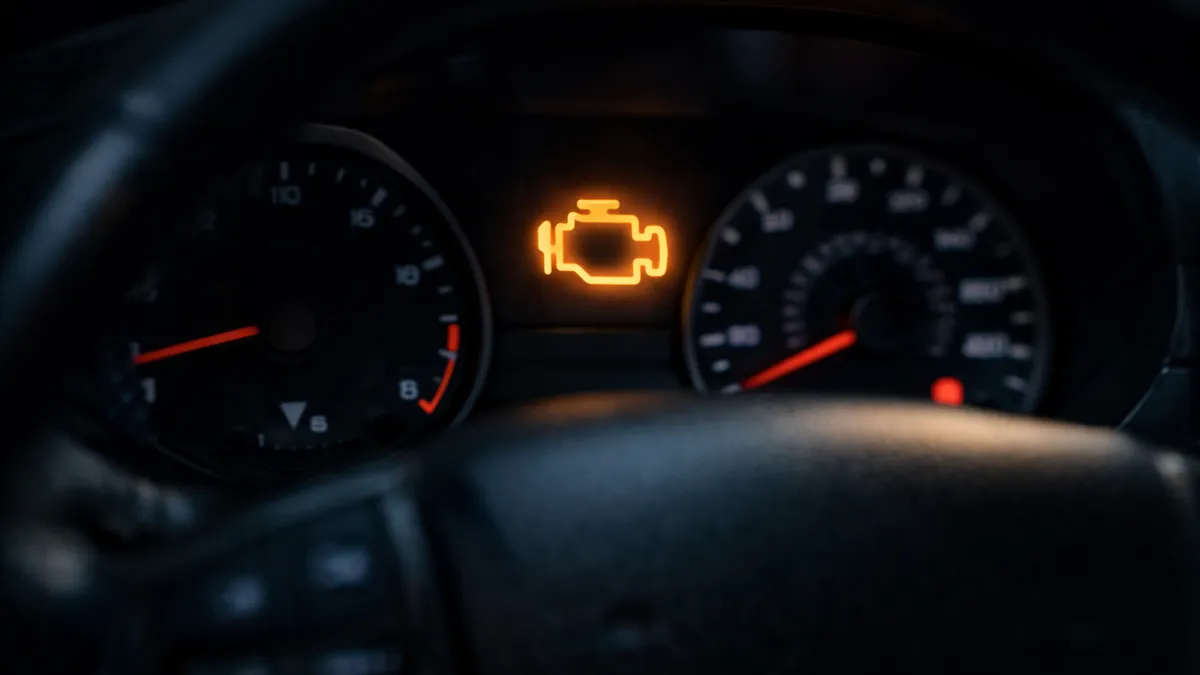
Check Engine Light On? Here's What It Could Mean
Your check engine light can mean anything from a loose gas cap to a serious engine problem. Here's how to tell the difference and what to do next.
Ready to Get Your Vehicle Fixed?
Schedule your appointment today. Free estimates on all repairs -- we'll explain what needs to be done before we do any work.