DIAGNOSTICS
Car Won't Start in Cold Weather — Troubleshooting Guide
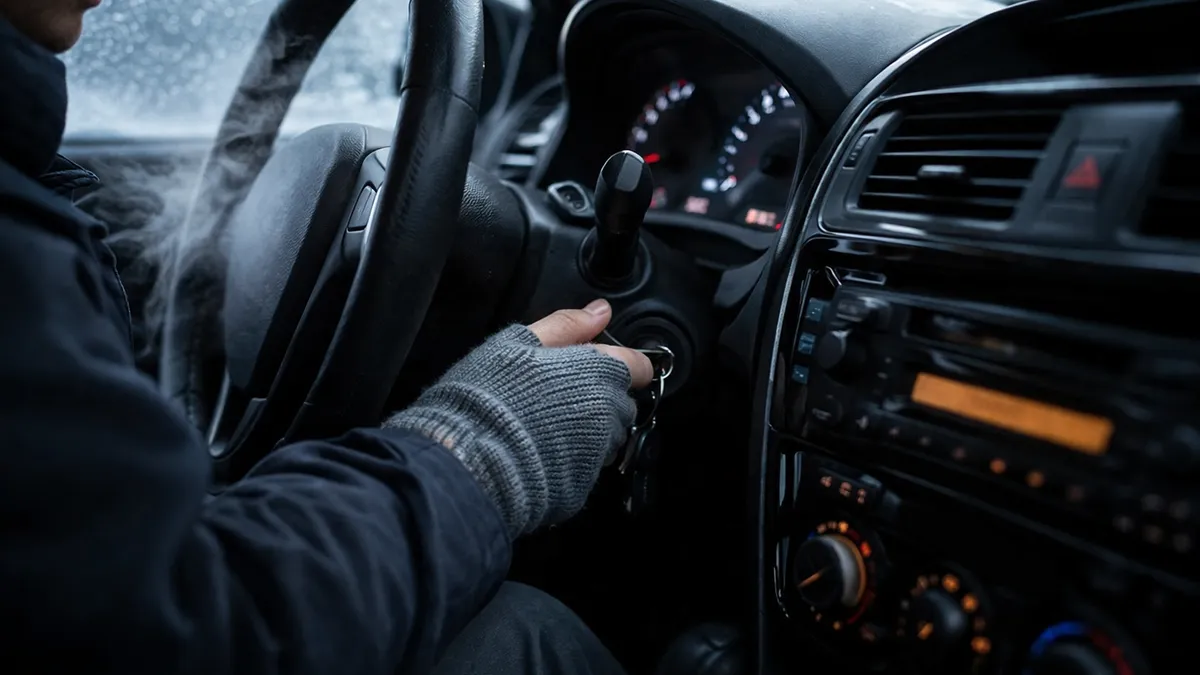
Nothing ruins a Connecticut morning like turning the key and hearing... nothing. Or maybe a sluggish, groaning crank that sounds like your engine is trying to wake up from a coma. If you've lived here long enough, you've been there. Litchfield County regularly drops below 0°F in January and February, and that kind of cold exposes every weakness in your vehicle's starting system.
Before you call a tow truck, here's what might be going on -- and what you can try yourself.
Dead or Weak Battery (Most Common)
About 80% of the cold-weather no-start calls we get at P&C Repair come down to the battery. Here's why: a car battery produces electricity through a chemical reaction, and that reaction slows down in cold temperatures. At 0°F, your battery delivers roughly half of its rated cranking power. At the same time, your engine needs more power to turn over because the oil is thicker and internal friction is higher.
Here's how to tell it's the battery:
- Slow, labored cranking that sounds weaker than usual -- the engine turns over but doesn't fire. This means the battery has some charge but not enough.
- Rapid clicking when you turn the key -- this means the battery is too weak to engage the starter motor. The solenoid is clicking but can't deliver enough current.
- Nothing at all -- no lights, no dashboard indicators, complete silence. The battery is completely dead.
If you have jumper cables or a portable jump starter, try a jump start. Connect the cables correctly (positive to positive, negative to a ground point on the engine block -- not the negative terminal of the dead battery). Let the donor vehicle run for a few minutes before attempting to start. If the engine fires up, let it run for at least 20 minutes to recharge the battery.
If your battery is 4 or more years old and you needed a jump to start it, don't just keep driving and hope for the best. That battery is on borrowed time. Come in and we'll test it -- if it's failing, we'll replace it before it strands you somewhere worse.
Starter Motor Issues
If you turn the key and hear a single loud click but the engine doesn't crank at all -- and your headlights and dashboard lights are bright -- the problem is likely your starter motor, not the battery. The battery has power, but the starter can't convert it into mechanical rotation.
A grinding noise when you turn the key suggests the starter gear isn't engaging properly with the flywheel. This can happen intermittently at first and then become consistent. Starter motors don't give much warning before they fail completely -- if you're hearing grinding or getting intermittent no-starts, get it looked at before it leaves you stranded.
Fuel System Problems
In extremely cold weather, moisture that has accumulated in your fuel lines can freeze and block fuel flow to the engine. The engine cranks normally -- it sounds like it's trying to start -- but it never fires because fuel isn't reaching the cylinders.
Prevention is the best approach here. Keep your fuel tank above one-quarter full during winter months. A fuller tank has less air space, which means less room for condensation to form. Some drivers add a fuel line antifreeze product (like HEET) every few fill-ups during the coldest months. It absorbs moisture in the fuel system and prevents freezing.
If you suspect frozen fuel lines, sometimes the only fix is to get the vehicle into a warm garage and wait for things to thaw. It's not glamorous, but it works.
Oil Too Thick
Engine oil thickens in cold weather. If you're running old oil that's past its change interval, or if you have the wrong viscosity for winter conditions, the oil can become thick enough to make the engine extremely hard to turn over. You'll hear the starter laboring -- it sounds like the engine is cranking in slow motion.
Modern synthetic oils handle cold weather much better than conventional oil. A 0W-20 or 5W-30 synthetic flows freely even at sub-zero temperatures, while conventional oil of the same grade thickens considerably. If you haven't had an oil change in a while and you're struggling with cold starts, that's a sign to come in for an oil change with the right winter-weight oil.
Alternator Issues
Here's a scenario we see regularly: a customer jumps their car, drives to work, and the car is dead again at the end of the day. They jump it again, drive home, dead again the next morning. They replace the battery, and the same thing happens with the new battery.
The problem isn't the battery -- it's the alternator. The alternator charges the battery while the engine is running. If it's failing, the battery never gets fully recharged, and you're essentially running on whatever charge the jump start gave you. Eventually even a brand-new battery will die if the alternator isn't doing its job.
We can test your alternator's output in minutes with a voltmeter. A healthy charging system should read between 13.5 and 14.8 volts at the battery with the engine running. If it's below that, the alternator is likely failing. Visit our diagnostics page for more on how we test electrical systems.
What to Try Before Calling a Mechanic
Before you pick up the phone, try these steps in order:
- Turn off all accessories. Turn off the heater, radio, lights, seat warmers -- everything. You want every bit of battery power going to the starter.
- Try starting for no more than 10 seconds at a time. Cranking for longer than that overheats the starter and drains the battery faster.
- Wait 30 seconds between attempts. This lets the starter cool and the battery recover slightly.
- Try a jump start. If you have cables and a neighbor's car, give it a shot. Let the donor vehicle run for 3-5 minutes before attempting the start.
- Check for loose battery cables. Pop the hood and look at the battery terminals. If a cable is loose, you may be able to tighten it with a wrench. Wiggle the cables -- if the connection moves easily, it's not tight enough.
When to Call a Shop
Sometimes the DIY approach isn't going to cut it. Call a mechanic or tow service if:
- You've tried jumping the car multiple times and it won't hold a charge
- You smell gas, burning, or anything unusual when trying to start
- You see smoke from under the hood
- The engine cranks but absolutely won't fire, even with a jump
- Your battery keeps dying repeatedly, even after replacement
Continuing to crank an engine that won't start can cause additional damage -- flooded cylinders, a burned-out starter, or a completely drained battery that can no longer accept a charge.
One more CT-specific note: block heaters are common in the Midwest and northern states, but most Connecticut drivers don't use them. If you park in a garage -- even an unheated one -- your car will be significantly warmer than one parked outside. An unheated garage can be 10-20 degrees warmer than outdoor ambient temperature, and that difference matters when we're talking about battery performance and oil viscosity.
If your car left you stranded this winter, or if you want to make sure it won't, bring it to P&C Repair at 64 N Main St in Thomaston. We'll test your battery, check your charging system, and make sure your vehicle is ready for whatever January and February throw at it. Call us at (860) 601-0271.
Need Help With This?
If something in this article sounds like what your vehicle is going through, bring it in. We'll diagnose the issue and give you a straight answer.
Keep Reading
More from The Garage
Check Engine Light On? Here's What It Could Mean
Your check engine light can mean anything from a loose gas cap to a serious engine problem. Here's how to tell the difference and what to do next.
Winter Car Maintenance Checklist for Connecticut Drivers
Connecticut winters are tough on cars. Here's what to check before the cold hits — from tires and batteries to oil and coolant. A seasonal checklist from a Thomaston mechanic.
Ready to Get Your Vehicle Fixed?
Schedule your appointment today. Free estimates on all repairs -- we'll explain what needs to be done before we do any work.